

Vertical Machining Centre (VMC) machining has become an essential manufacturing process for industries that demand high precision, repeatability, and production efficiency. As industrial components become more complex, manufacturers need machining solutions capable of maintaining tight tolerances while delivering consistent quality across both small and large production batches.
From automotive and earthmoving equipment to defence systems and pharmaceutical machinery, VMC machining enables manufacturers to produce intricate components with greater accuracy and shorter production cycles.
Understanding VMC Machining
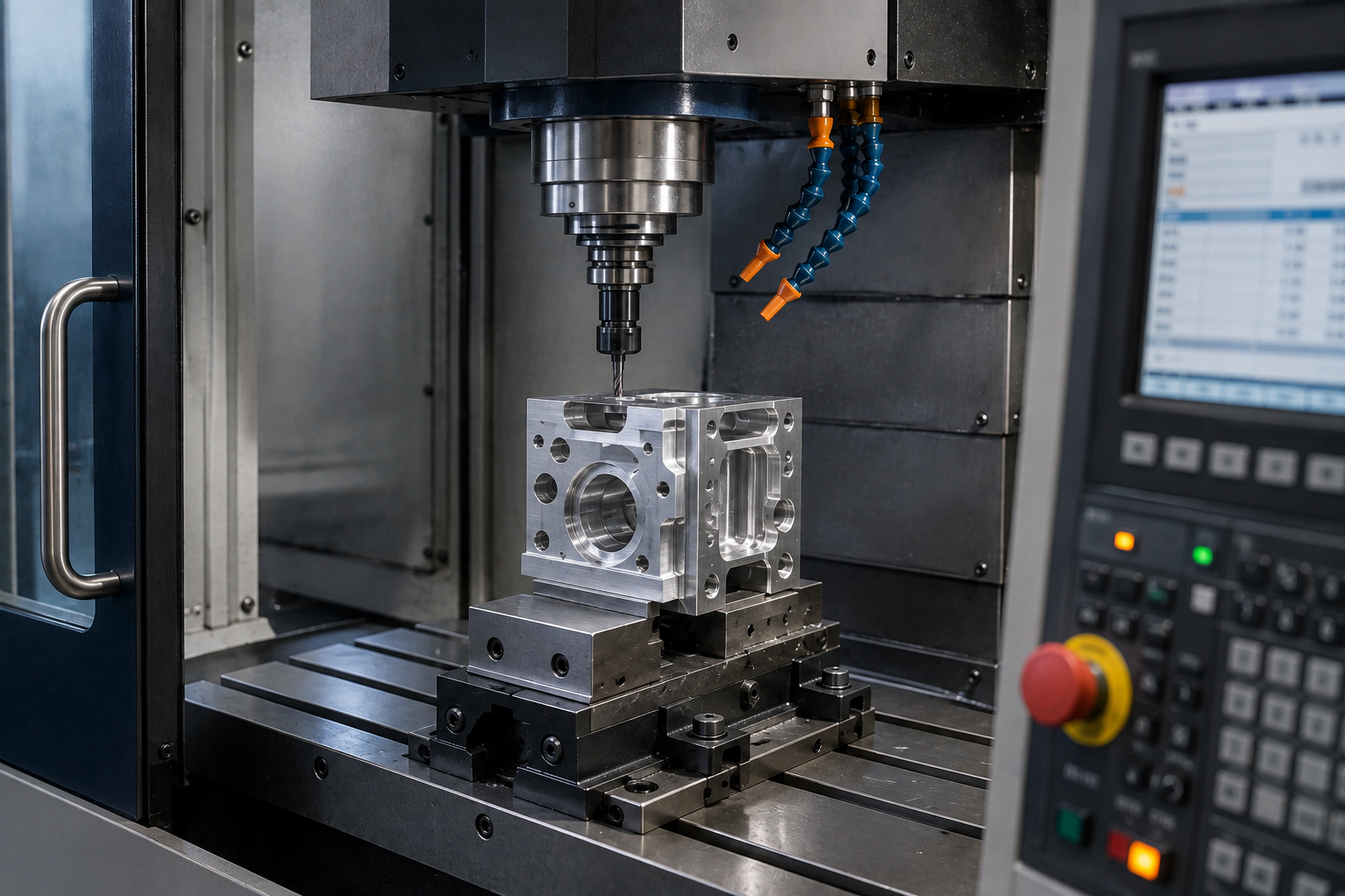
A Vertical Machining Centre is a CNC-controlled machine in which the spindle is positioned vertically above the workpiece. This configuration allows precise milling, drilling, tapping, boring, and contour machining in a single setup.
Modern VMC machines are programmed using CAD and CAM software, allowing manufacturers to create highly detailed components with minimal manual intervention.
Typical VMC machining operations include:
- Face milling
- Slot milling
- Pocket machining
- Drilling
- Thread tapping
- Profile machining
- Precision boring
The ability to complete multiple operations without repeatedly repositioning the workpiece helps improve dimensional consistency and production efficiency.
Why Manufacturers Choose VMC Machining
Industrial buyers often prioritise consistency over simply achieving a single accurate component. VMC machining offers repeatable precision that supports long production runs without compromising quality.
Some of the key advantages include:
- High dimensional accuracy
- Excellent surface finish
- Faster production cycles
- Reduced setup time
- Better repeatability
- Lower risk of manual errors
- Efficient machining of complex designs
These advantages make VMC machining suitable for components where precision directly affects assembly and operational performance.
Applications Across Major Industries
Different industries rely on VMC machining for a wide variety of precision-engineered components.
Automotive Manufacturing
Automotive production requires accurately machined brackets, housings, fixtures, gearbox components, engine parts, and tooling. High-volume production demands identical dimensions across every batch, making VMC machining a preferred solution.
Earthmoving Equipment
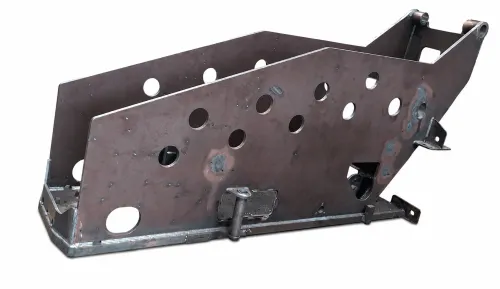
Construction machinery operates under continuous mechanical stress. Precision-machined structural parts, hydraulic mounting plates, bearing housings, and equipment brackets contribute to improved durability and equipment reliability.
Defence Equipment
Defence applications require components manufactured with strict dimensional control and dependable quality standards. VMC machining supports the production of complex parts that demand high precision and repeatability.
Mining Machinery
Mining equipment contains numerous wear-resistant machined components that must perform under harsh operating conditions. Accurate machining helps improve equipment reliability while reducing maintenance interruptions.
Pharmaceutical Machinery
Manufacturing systems used in pharmaceutical facilities rely on precision-machined components to maintain smooth movement, equipment stability, and accurate process control throughout production.
Materials Commonly Used in VMC Machining
VMC machines can process a wide range of engineering materials depending on application requirements.
Common materials include:
- Mild steel
- Carbon steel
- Stainless steel
- Alloy steel
- Aluminium
- Tool steel
- Cast iron
The correct combination of machine capability, cutting tools, and machining parameters helps achieve consistent quality regardless of material type.
Factors That Influence Machining Accuracy
Although CNC technology provides excellent precision, several production factors influence the final quality of machined components.
Manufacturers carefully monitor:
- Machine calibration
- Cutting tool condition
- Fixture stability
- Programming accuracy
- Material quality
- Coolant management
- Inspection frequency
Controlling these variables helps reduce dimensional variation and ensures finished components meet engineering specifications.
Quality Inspection Throughout Production
Precision machining is only complete when every critical dimension has been verified.
Quality assurance generally includes:
- First-piece inspection
- In-process dimensional checks
- Coordinate measurement where required
- Surface finish evaluation
- Final inspection before dispatch
These inspection practices help maintain consistency across production batches while reducing the likelihood of costly rework.
Why Integrated Manufacturing Improves Efficiency
Many industrial components require fabrication, machining, welding, and assembly before they are ready for installation. Coordinating these activities through multiple vendors can increase lead times and introduce dimensional inconsistencies.
Manufacturers operating from industrial hubs such as Chakan often benefit from integrated production capabilities that combine advanced machining infrastructure with skilled engineering resources. This approach helps streamline manufacturing while supporting faster project execution for OEMs across Maharashtra and other industrial regions.
Pranav Heavy Industries Private Limited manufactures precision-engineered components using advanced VMC machining alongside fabrication and heavy engineering services. By combining modern CNC technology with stringent quality practices, the company supports industries including automotive, earthmoving equipment, mining, defence, and pharmaceutical machinery with components designed for consistent performance and reliable manufacturing outcomes.