When an industrial component requires both fabrication and precision machining, procurement teams often face an important sourcing decision: should welding and machining be handled by separate vendors, or should both operations be coordinated through one manufacturing source? Evaluating Industrial Welding and Machining Solutions requires looking beyond individual process quotations.
For OEMs and engineering companies around Chakan, Pune, and Maharashtra, the right model often depends on component complexity, tolerance requirements, production volume, logistics, and accountability.
The Separate-Vendor Approach
Using specialist vendors for different processes can work effectively when components are straightforward and interfaces between operations are clearly defined.
A fabrication vendor completes the welded structure, after which the component is transported to a machining supplier.
This approach can provide flexibility, particularly when a company already has approved vendors for each process. However, it introduces additional coordination.
Potential challenges include:
- Extra material movement
- Multiple production schedules
- Responsibility gaps when dimensions are incorrect
- Longer feedback loops
- Separate inspection systems
- Additional loading and unloading
- Greater production tracking effort
These issues become more significant for heavy components that are difficult or expensive to transport.
What Changes With Integrated Manufacturing?
An integrated manufacturing setup coordinates fabrication and machining around one production plan.
The machining team can review drawings before fabrication begins and identify requirements such as datum strategy, machining stock, tool accessibility, or areas where weld distortion could affect final dimensions.
This early interaction can prevent downstream problems.
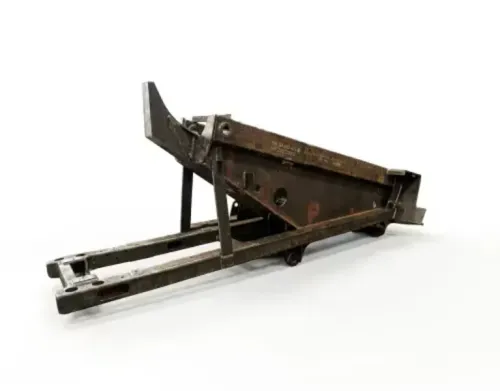
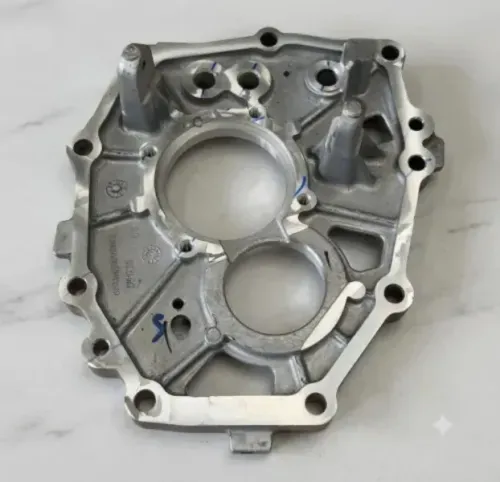
For example, if a large welded frame needs accurately aligned bores, fabrication can be planned around the final machining requirement instead of treating the bores as an issue to solve after welding.
Compare Total Manufacturing Cost, Not Only Process Rates
A lower fabrication rate does not automatically mean a lower finished-component cost.
Procurement teams should consider:
- Inter-vendor transportation
- Loading and handling
- Inspection duplication
- Rework risk
- Production coordination time
- Component turnaround
- Responsibility for dimensional issues
For heavy components, logistics alone can materially affect the economics of splitting operations between suppliers.
Accountability Becomes Clearer
Suppose a fabricated component reaches machining and there is insufficient material on a critical surface. With separate suppliers, determining responsibility can consume valuable time.
Was the fabrication dimension incorrect? Was the machining allowance inadequate? Did distortion occur during welding? Was the drawing interpreted differently?
When fabrication and machining are planned together, these questions can often be addressed earlier because the manufacturing sequence is considered as a whole.
When Separate Vendors May Still Make Sense
Integrated manufacturing is not automatically the best choice for every part. Separate sourcing can remain practical when:
- Fabrication is simple
- Machining requirements are minimal
- Components are easy to transport
- Existing suppliers have highly specialized capabilities
- Production quantities justify dedicated process vendors
The decision should therefore be component-specific.
What Buyers Should Evaluate in Chakan
Chakan's manufacturing ecosystem gives industrial buyers access to a broad network of engineering capabilities. When selecting a source for welded and machined components, evaluate whether the proposed manufacturing route matches the drawing and production requirement.
Useful questions include whether the supplier reviews machining requirements before fabrication, how dimensional inspections are handled between processes, and how non-conformities are controlled.
Pranav Heavy Industries Private Limited provides manufacturing capabilities within the heavy fabrication and machining segment in Chakan, making it relevant for buyers evaluating coordinated production of engineered components.
For complex welded components, integration can reduce handoffs and improve visibility across the manufacturing cycle. The strongest sourcing decision, however, comes from comparing the complete route from raw material to inspected finished component rather than comparing welding and machining prices as isolated line items.
Keywords