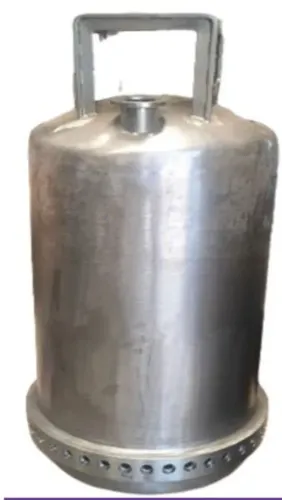


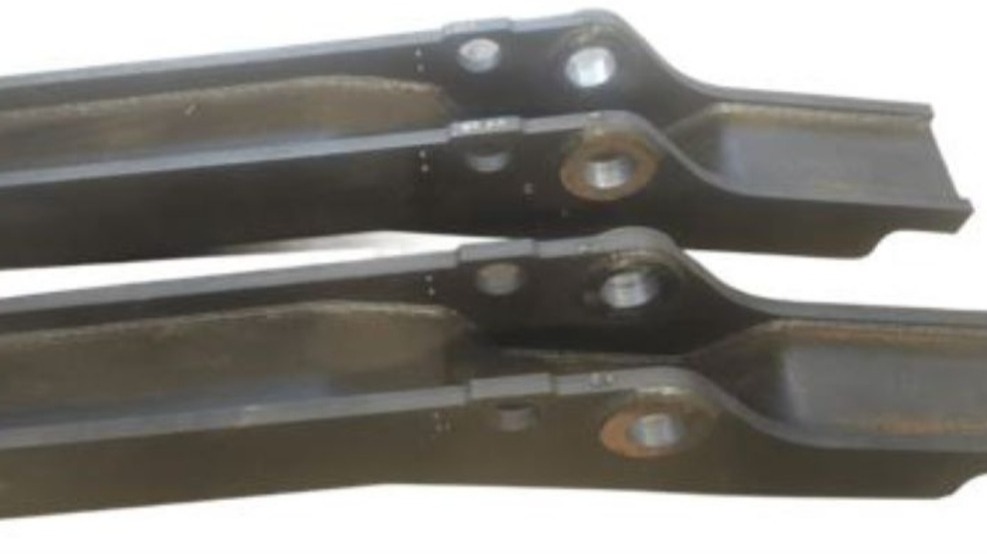
Heavy industrial projects depend on fabricated structures that can withstand demanding loads, operating conditions, vibration, and long service cycles. For OEMs, engineering companies, and project teams, Heavy Structural Fabrication Services involve much more than joining large steel sections. The process requires careful material handling, controlled welding, dimensional accuracy, inspection, and coordination between fabrication and machining activities.
Chakan has developed into an important manufacturing zone in Maharashtra, supporting automotive, engineering, heavy equipment, and industrial supply chains. For companies sourcing fabricated structures in this region, understanding the complete fabrication process helps procurement and production teams evaluate components more effectively.
What Does Heavy Structural Fabrication Include?
Heavy structural fabrication converts plates, sections, beams, and other raw materials into engineered assemblies according to approved drawings and specifications. Depending on the application, the work may involve:
- Material identification and preparation
- Plate cutting and profiling
- Edge preparation and beveling
- Forming and bending
- Fit-up of structural members
- Welding and controlled sequencing
- Dimensional inspection
- Stress-relieving requirements where applicable
- Machining of critical interfaces
- Surface preparation and finishing
- Final inspection before dispatch
The challenge increases as component size, thickness, geometry, and tolerance requirements become more demanding.
Why Fabrication Accuracy Matters
A large fabricated structure may appear relatively straightforward, but small dimensional deviations can create significant problems during assembly. Incorrect hole positions, distorted mounting faces, unsuitable weld sequencing, or poor alignment can affect installation and equipment performance.
Fabricators therefore need to control dimensions throughout production rather than waiting until final inspection. Fixtures, datum references, intermediate measurements, and suitable welding sequences help maintain geometry as fabrication progresses.
This is particularly important when the fabricated structure will later undergo precision machining.
Material Selection Influences the Fabrication Process
Heavy structures can be produced from different grades of carbon steel, high-strength steel, stainless steel, and application-specific alloys. Each material behaves differently during cutting, forming, welding, and heat input.
Procurement teams should ensure that drawings and purchase specifications clearly define material grades and applicable requirements. Material traceability becomes especially important for components intended for critical industrial applications.
Using the correct material is only the first step. The fabrication process must also account for weldability, thickness, mechanical properties, distortion risk, and subsequent machining requirements.
Fabrication and Machining Should Be Planned Together
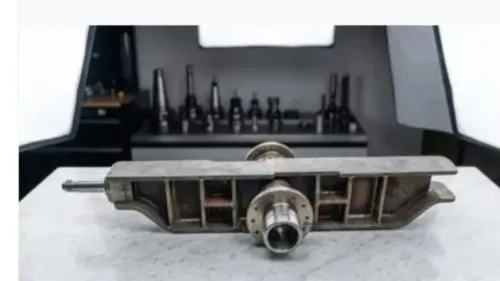
Many heavy engineering components require machined bores, mounting faces, slots, holes, or reference surfaces after welding. Treating fabrication and machining as completely separate operations can create unnecessary difficulties.
For example, welding can introduce distortion that changes the position of a surface intended for machining. Appropriate machining allowances therefore need to be considered before fabrication begins.
Integrated planning helps establish:
- Fabrication datums
- Machining allowances
- Weld sequence
- Inspection stages
- Final machining references
This approach is especially useful for machine frames, equipment bases, structural housings, support assemblies, and large welded components.
What Should Industrial Buyers Review?
Before approving a heavy fabrication source, engineering and procurement teams should review whether the manufacturing setup matches the actual component requirement. Important considerations include fabrication capacity, material thickness capability, welding procedures, handling equipment, machining requirements, inspection facilities, and experience with similar component sizes.
Drawing complexity also matters. A supplier capable of producing conventional welded structures may not automatically be suitable for assemblies requiring tight positional relationships between fabricated and machined features.
Chakan’s Relevance to Heavy Engineering Supply Chains
For manufacturers operating around Chakan, Pune, Talegaon, Ranjangaon, and other industrial areas of Maharashtra, proximity to a capable fabrication source can simplify technical discussions, inspection coordination, logistics, and production scheduling.
Pranav Heavy Industries Private Limited operates within this industrial manufacturing context, where heavy fabrication requirements frequently need to be coordinated with machining and engineering component production.
Ultimately, dependable heavy structural fabrication comes from controlling the complete manufacturing sequence rather than focusing only on the welding stage. Material preparation, dimensional planning, fabrication, machining allowances, inspection, and handling all contribute to whether a large structure performs correctly when it reaches the assembly floor.