

Welded Engineering Component Manufacturing combines fabrication knowledge with dimensional control to produce components that must perform as part of larger machines, equipment systems, and industrial assemblies. Unlike general-purpose welding work, engineered welded components are manufactured against drawings, material specifications, tolerances, and functional requirements.
For OEMs and manufacturing companies in Chakan and across Maharashtra, understanding how welded components are produced can help prevent sourcing problems that only become visible during machining or final assembly.
A Welded Component Is More Than a Fabricated Shape
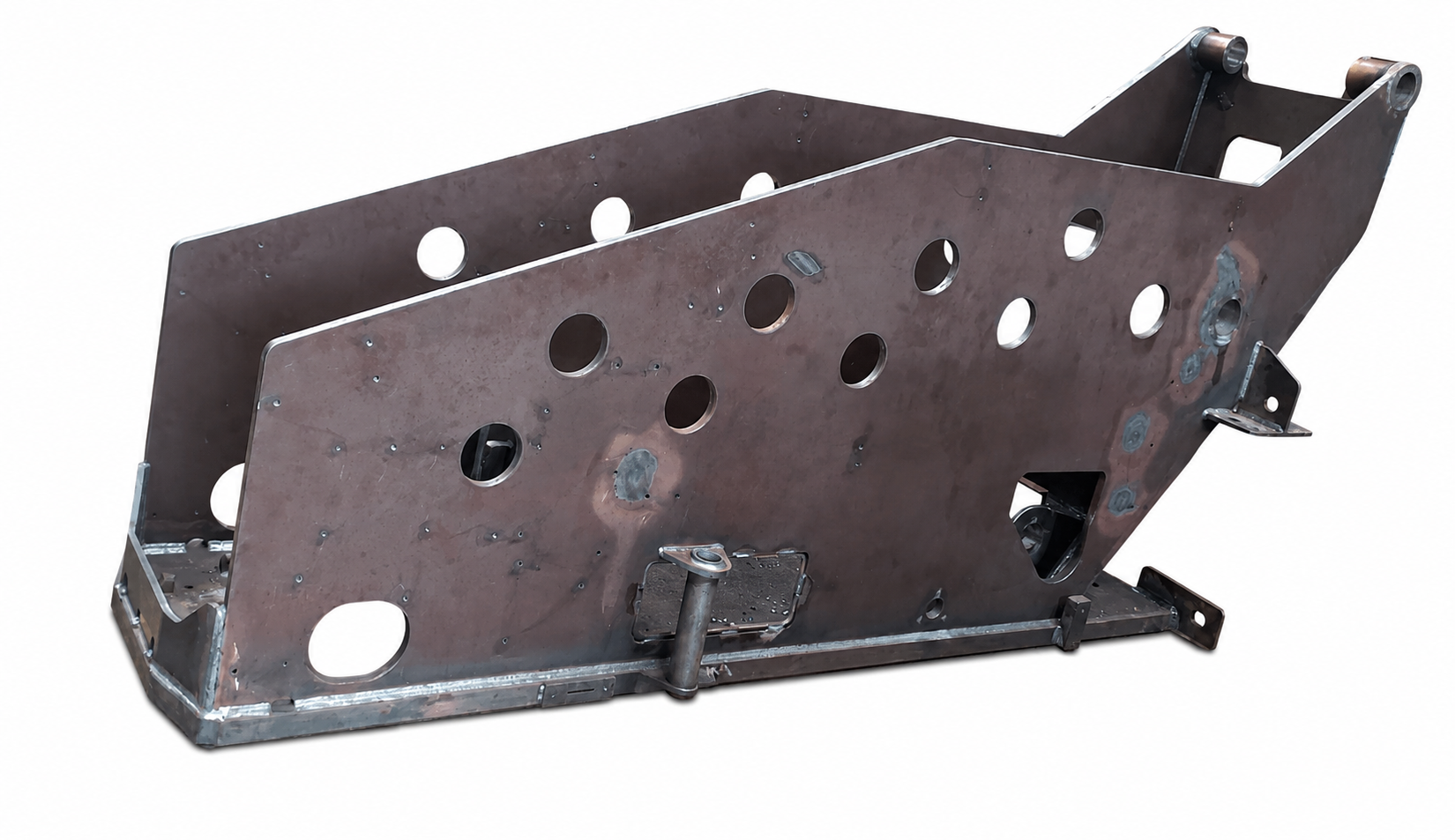
An engineering component may contain plates, ribs, bosses, tubes, brackets, supports, and machined interfaces. Each element has a specific functional relationship with the others.
During welding, concentrated heat causes expansion and contraction. If the manufacturing sequence is not planned properly, these thermal effects can produce distortion, angular movement, or dimensional variation.
That is why welded engineering manufacturing normally requires planning before the first weld is made.
Typical considerations include:
- Joint design
- Material grade and thickness
- Fit-up dimensions
- Welding sequence
- Fixture requirements
- Accessibility for welding
- Distortion allowance
- Machining allowance
- Inspection stages
These factors become increasingly important as the size and complexity of the component increase.
Why Weld Sequencing Matters
Welding every joint simply in the order that it is accessible can lead to cumulative distortion. A controlled sequence distributes heat more appropriately and helps maintain critical geometry.
Large components may require measurements at intermediate stages so deviations can be identified before additional welding makes correction difficult.
Fixtures and temporary supports may also be used to maintain alignment. Their design should allow sufficient access without introducing unnecessary restraint or creating other fabrication problems.
Machining Requirements Influence Welding Decisions
Many welded engineering components require precision machining after fabrication. Bearing locations, bores, mounting faces, guide surfaces, and bolt patterns may need considerably tighter tolerances than the fabricated structure itself.
Machining allowance therefore has to be incorporated into the fabrication plan.
Too little allowance may leave insufficient material to achieve the required final surface. Excessive allowance can increase machining time and material removal. The objective is to provide practical allowance based on the fabrication process and final tolerance.
Inspection Should Happen Throughout Manufacturing
Waiting until the completed component reaches final inspection can be expensive. If an important dimension has moved significantly during an earlier welding stage, correction may require extensive rework.
A more controlled approach uses inspection checkpoints such as:
- Raw material verification
- Fit-up inspection
- Dimensional checks during fabrication
- Weld inspection
- Pre-machining dimensional verification
- Machining inspection
- Final dimensional confirmation
The exact inspection plan depends on component criticality and customer requirements.
Documentation Supports Repeat Production
OEM sourcing frequently involves repeat orders rather than one-off fabrication. When a component moves into regular production, documented manufacturing methods can improve consistency between batches.
Approved drawings, process instructions, inspection records, material documentation, and controlled manufacturing sequences help reduce dependence on individual operator memory.
This becomes particularly valuable when multiple similar components are being manufactured over an extended production schedule.
Why the Chakan Manufacturing Ecosystem Matters
Chakan is surrounded by a broad industrial ecosystem serving automotive, construction equipment, engineering, and machinery manufacturers. Buyers in this region often need suppliers capable of working with production drawings while coordinating fabrication, machining, inspection, and delivery requirements.
For companies such as Pranav Heavy Industries Private Limited, welded engineering manufacturing therefore involves the interaction of several disciplines rather than welding as an isolated activity.
A well-produced welded component should arrive ready to fit into the next stage of the customer's manufacturing process. Achieving that result depends on understanding how material behavior, welding heat, dimensional control, machining, and inspection affect one another from the beginning of production.