High-strength steels can help engineers meet demanding structural requirements, but manufacturing them requires attention to material grade, cutting, forming, welding, heat input, and inspection. When sourcing High Strength Steel Fabrication Services, procurement teams should verify that the supplier's manufacturing approach is compatible with the specific steel and engineering specification.
For OEMs and project teams in Chakan and Maharashtra, a structured checklist can make technical supplier evaluation considerably more effective.
1. Confirm the Exact Material Grade
“High-strength steel” describes a broad material category rather than one universal grade.
Different steels can have different chemical compositions, mechanical properties, thickness-dependent requirements, and fabrication recommendations.
The purchase order and drawing should identify the required grade clearly. Material documentation and identification requirements should also be established before manufacturing begins.
2. Review Cutting and Edge Preparation
Thermal cutting, machining, bevel preparation, and forming can influence subsequent fabrication.
The appropriate method depends on the material grade, thickness, joint configuration, and project specification.
Edges intended for welding should be prepared according to the drawing and applicable procedure. Inconsistent joint preparation can affect fit-up and make controlled welding more difficult.
3. Examine Welding Requirements
Welding is one of the most important areas to review.
Depending on the grade and specification, fabrication planning may need to consider heat input, preheat, interpass temperature, consumable selection, joint design, and welding sequence.
These parameters should follow applicable welding procedures, material recommendations, drawings, and customer requirements rather than generic shop practices.
4. Check Distortion-Control Planning
High-strength material does not eliminate the dimensional effects of welding.
Large fabricated structures can still experience movement as welds cool. The manufacturer should determine how critical dimensions will be maintained through sequencing, fixturing, measurement, and machining allowances.
This is particularly important for assemblies containing precision-machined interfaces.
5. Verify Machining Capability
Some high-strength steel fabrications require machining after welding.
Before placing the order, check whether the supplier can accommodate the component's size, weight, material characteristics, and tolerance requirements.
The machining team should understand which surfaces and features establish the final assembly geometry.
6. Define Inspection Requirements
Inspection should be based on the engineering specification.
Depending on the component, requirements may include dimensional verification, weld inspection, material records, or customer-specified testing.
The required acceptance criteria should be agreed before production so there is no uncertainty at dispatch.
7. Review Material Handling Capacity
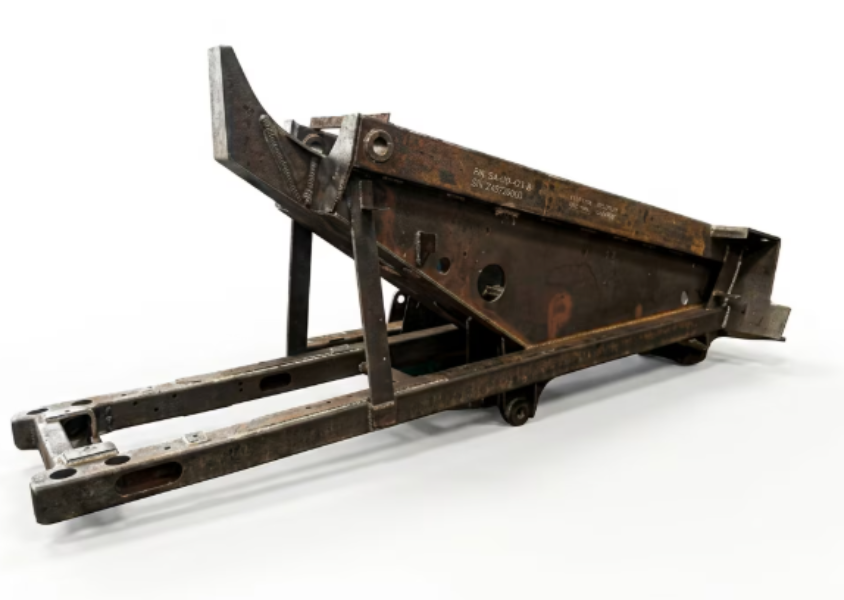
Heavy high-strength steel components may require cranes, lifting fixtures, and controlled movement through multiple manufacturing stages.
Buyers should verify that the supplier's infrastructure can safely accommodate the complete fabricated assembly rather than only individual plates.
8. Discuss Repeatability
For OEM production, ask how the manufacturer will maintain consistency across repeat batches.
Fixtures, documented process routes, inspection plans, and controlled drawing revisions can all contribute to repeatable manufacturing.
Pranav Heavy Industries Private Limited provides heavy fabrication and machining capabilities from Chakan, an industrial location serving OEM and engineering supply chains throughout the Pune region and Maharashtra.
Make Supplier Approval Component-Specific
A fabrication company may have experience with heavy steel structures without necessarily being suitable for every high-strength steel grade or critical application.
Before approval, provide the actual drawing, material specification, quantity, inspection requirements, and delivery expectations. A technical review based on these details provides far more useful information than a general capability discussion.
For procurement teams, this checklist helps establish whether the proposed manufacturing route addresses the characteristics that matter most: material control, welding discipline, dimensional accuracy, machining compatibility, inspection, and repeatability. Those factors provide a stronger foundation for sourcing critical high-strength steel components.
Keywords