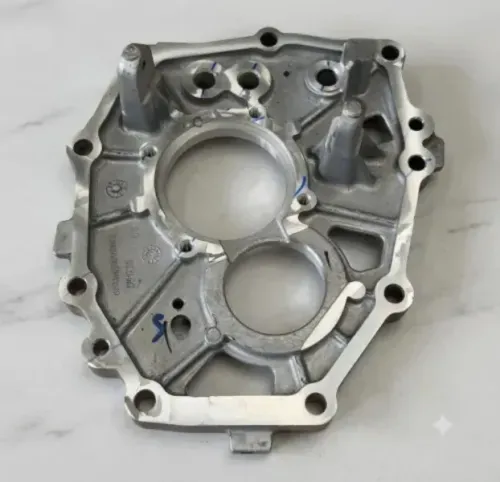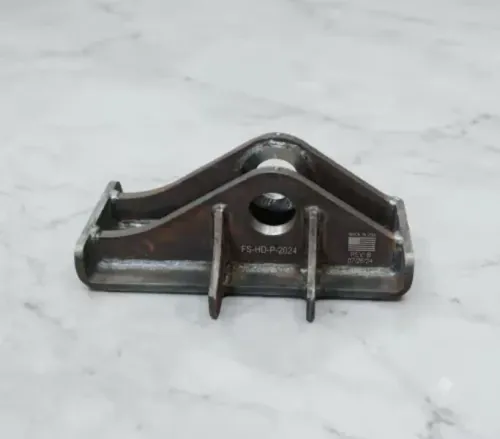
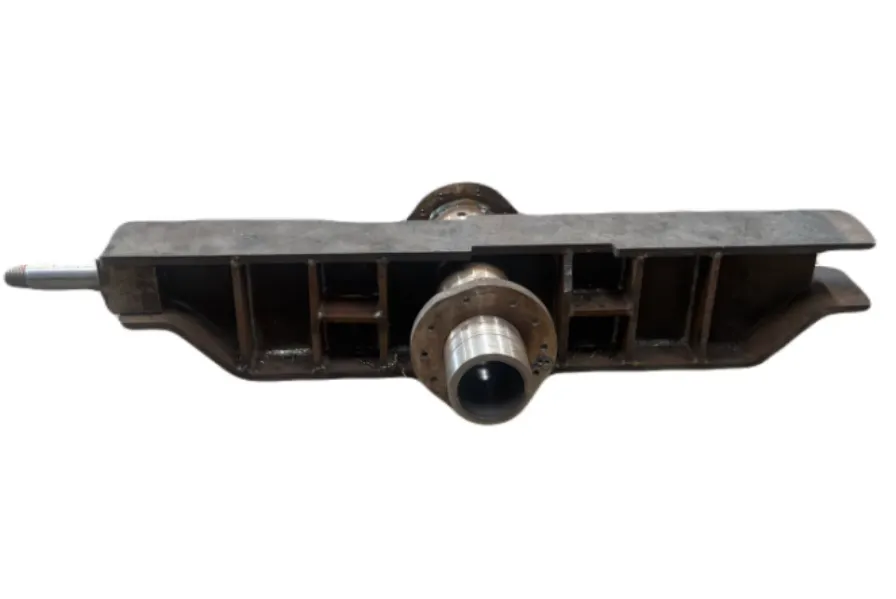
Duplex Steel Component Machining requires careful process planning because duplex stainless steels have machining characteristics that differ from conventional carbon steels and many commonly machined materials. Industrial buyers should therefore evaluate whether a machining provider has the equipment, tooling approach, process knowledge, and inspection capability appropriate for the specified grade and component.
For engineering companies sourcing complex parts in Chakan and Maharashtra, supplier selection becomes especially important when duplex components are large, tolerance-critical, or part of fabricated assemblies.
Why Duplex Steel Needs Careful Machining
Duplex stainless steels combine ferritic and austenitic microstructures and are selected for applications where their specified combination of mechanical and corrosion-related properties is required.
From a machining perspective, these materials can present challenges such as high cutting forces and work-hardening tendencies.
Effective machining therefore depends on stable setups, suitable tooling, appropriate cutting conditions, and process consistency.
Machine Rigidity Matters
Large or heavy duplex components can place substantial demands on the machine and workholding arrangement.
A supplier should evaluate whether the machine has sufficient work envelope, load capacity, spindle capability, and rigidity for the proposed operation.
A technically capable cutting tool cannot compensate for an unstable setup. Vibration can affect tool life, surface condition, and dimensional accuracy.
Tooling Strategy Should Match the Feature
Different operations—turning, milling, drilling, boring, or threading—create different cutting conditions.
Tool geometry and cutting parameters should be selected for the actual material grade and feature rather than copied directly from conventional steel machining practices.
Tool access becomes another important consideration on large or geometrically complex components. Long-reach operations can require additional attention to stability.
Work Hardening Must Be Considered
Inappropriate machining conditions can make subsequent cutting more difficult.
Maintaining a controlled cutting action and avoiding unnecessary rubbing can be important when machining duplex materials. Tool condition should also be monitored because worn tooling can influence heat generation and dimensional performance.
The exact machining parameters depend on the grade, machine, tool manufacturer recommendations, geometry, and required finish.
Inspection Requirements Should Be Defined Early
Critical dimensions may include bore sizes, sealing faces, mounting features, concentricity, flatness, or positional relationships.
Before production, buyers should establish:
- Drawing revision
- Tolerance requirements
- Surface finish specifications
- Inspection method
- Required records
- Material documentation
This allows the machining and inspection teams to plan the component around its functional characteristics.
Ask These Questions Before Placing an Order
When evaluating a machining source, procurement managers can ask:
- Has the specific duplex grade been reviewed?
- Can the machine accommodate the complete component?
- How will the workpiece be held and referenced?
- Which dimensions are considered critical?
- How will in-process inspection be performed?
- Are special handling or documentation requirements involved?
- Can the provider manage any associated fabrication work if required?
Pranav Heavy Industries Private Limited operates in Chakan's heavy engineering manufacturing ecosystem with fabrication and precision machining capabilities for engineering components.
Supplier Readiness Is More Important Than a Generic Capability Claim
A statement that a company can “machine stainless steel” does not provide enough information for a duplex component.
The actual grade, component dimensions, tolerances, geometry, machining operations, and quantity need to be reviewed together. For a complex component, technical feasibility should ideally be established before commercial assumptions become fixed.
For industrial buyers around Chakan, Pune, and Maharashtra, this detailed evaluation helps distinguish general machining capacity from a manufacturing process genuinely suited to the proposed duplex steel component. The result is a more informed sourcing decision based on process capability, dimensional control, and project requirements rather than material name alone.
Keywords