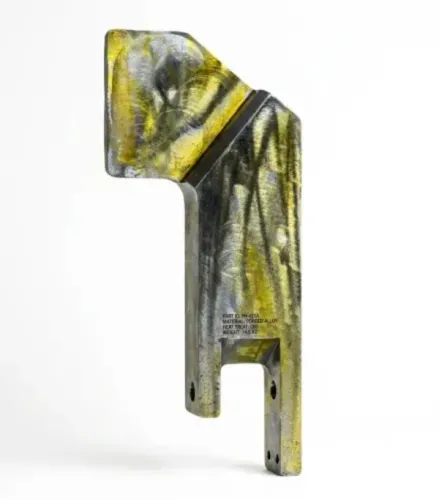
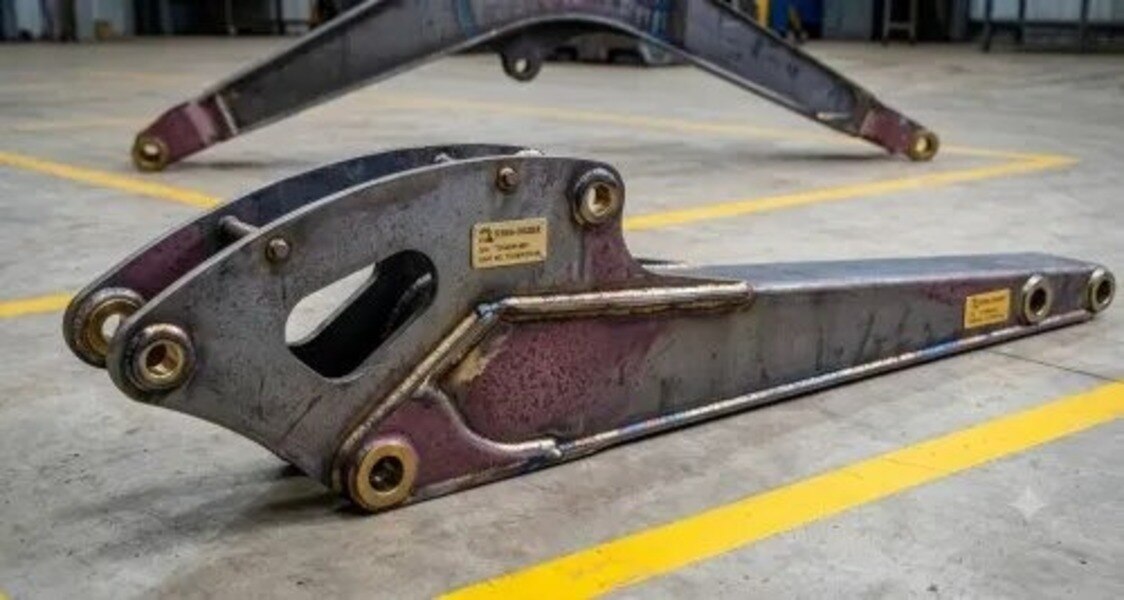
A sleeve can protect a shaft, restore a worn housing, carry oscillating loads or keep two components aligned, but only when its fit, material and installation match the duty. By the end, you will know how to identify the sleeve’s job, specify and inspect it, compare supplier evidence, and diagnose failures that a replacement sleeve alone cannot fix.
Key takeaways
- Match sleeve material to load, motion, lubrication and contamination.
- Measure unworn bore and shaft surfaces instead of copying worn dimensions.
- Request material certificates, dimensional reports, hardness results and surface-finish records.
- Control alignment, clearance, lubrication and installation force to protect service life.
What an industrial sleeve does inside working machinery
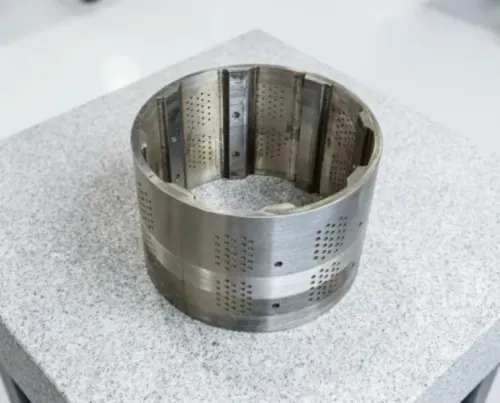
A sleeve separates, supports or spaces parts at a machinery interface; it is not automatically an interchangeable wear part. In a pivot joint, bucket or boom pin, hydraulic-cylinder eye, linkage or rotating shaft, the sleeve provides a controlled bearing surface that limits bore enlargement, shaft wear, fretting, galling and excessive clearance.
| Sleeve role | Interface | Failure it prevents |
|---|---|---|
| Plain bearing surface | Pin, shaft or bore | Seizure, rapid wear and lubricant leakage |
| Spacer | Axle assembly or bolted stack | Lost preload and incorrect component spacing |
| Wear liner | Housing or bearing seat | Bore enlargement and housing damage |
| Alignment element | Pin and housing bore | Edge loading and misalignment |
| Protective insert | Seal running surface | Seal abrasion and leakage |
| Replaceable interface | Worn linkage bore | Replacing the linkage or housing |
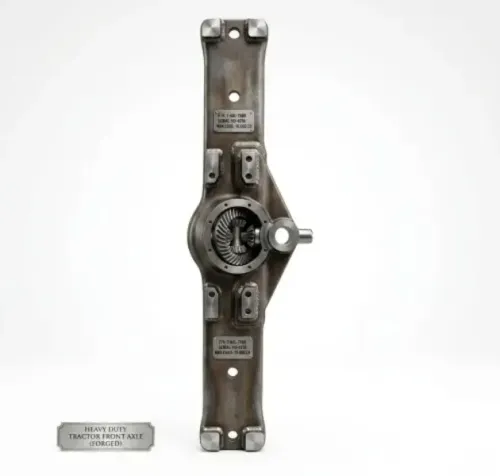
An articulated bucket pin needs an oscillating bearing interface with suitable clearance and lubrication. A spacer in an axle assembly transfers structural load and preserves stack-up; it is not a sliding bearing, so substituting one for the other can cause seizure or lost preload.
A sleeve also renews a worn bore while leaving the larger linkage in service. Specify the functional datum, load direction, lubrication condition and replacement criterion—not only inside and outside diameters. A dimensionally correct bore can still fail if it is oval, tapered or misaligned.
Recurring one-sided polishing, edge loading or rapid pin wear points to a distorted housing, damaged counterface or alignment problem. Replacing the sleeve alone will repeat the failure. An industrial sleeve manufacturer should therefore identify whether the part is a bearing, spacer, liner, seal insert or repair sleeve before making it interchangeable.
How to choose steel, bronze, polymer or a bearing
Plain steel suits heavily loaded pins and bores because it provides crushing strength, stiffness, impact resistance and straightforward repairability. Hardened or case-hardened steel handles abrasive contact, but hardness can accelerate shaft wear or galling if the counterface, surface finish and lubrication do not match.
| Option | Main advantage | Choose it when |
|---|---|---|
| Plain steel sleeve | Strength and repairability | High load, impact and moderate sliding |
| Bronze sleeve | Compatible sliding and seizure resistance | Steel pins run against a lubricated bearing surface |
| Polymer-lined bushing | Low friction and low maintenance | Grease-free or self-lubricating service is required |
| Split sleeve | Removal without dismantling surrounding parts | Access is restricted or downtime is costly |
| Flanged sleeve | Axial retention and load transfer | Thrust or cyclic migration must be controlled |
| Rolling-element bearing | Low friction at speed | Continuous rotation makes rolling contact preferable |
Select the construction against load, impact, oscillation angle, speed, temperature, contamination, lubricant viscosity, duty cycle and counterface material. A flanged sleeve is not interchangeable with a plain sleeve, and an oscillating joint does not automatically need a rolling-element bearing.
The custom steel sleeve benefits include resistance to crushing, dimensional stability, press-fit compatibility and replacing the sleeve instead of the housing. Steel is the wrong choice for corrosion-prone surroundings, electrical insulation, very low mass or grease-free operation unless a suitable coating or liner solves those limits.
Consider a greased excavator linkage: steel tolerates impact and high pin loads. A sealed actuator joint exposed to water may favour a polymer-lined bushing; hardened steel can distort during treatment, wear its counterface or seize without suitable clearance and lubrication.
How to specify and measure a sleeve without copying wear
Your drawing and purchase request must define the sleeve’s function and datum, not just its inside and outside diameters. State the load direction, lubrication condition, replacement criterion and the surface from which coaxial features are controlled.
1. Specify inside diameter, outside diameter, overall length, wall thickness, flange diameter and thickness, fit tolerances, concentricity, roundness, cylindricity and surface roughness. Show chamfers, grooves, oil holes, keyways, retaining features and removal holes with locations, sizes and edge distances.
2. Measure the mating pin or shaft and housing before copying any part. Record diameters at both ends and the middle, at several circumferential positions; compare readings to expose taper, ovality and uneven wear. Check shaft or pin runout and housing alignment from the functional datum.
A worn sleeve can preserve a damaged bore dimension and reproduce its failure.
3. Classify the joint as a clearance, transition or press fit, then calculate actual maximum and minimum clearance or interference. ISO 286 callouts such as H7/g6 and H7/p6 define tolerance positions, not a complete working fit.
Diameter, wall thickness, sleeve and housing materials, load, temperature and assembly method determine interference; too much can distort the housing or crack the sleeve.
For a lubricated or oscillating joint, select running clearance to retain lubricant without causing seizure. Excess clearance increases leakage, impact loading, vibration and edge loading; insufficient clearance starves the film. Your equipment drawing and operating load, speed, temperature and assembly method must control the final values.
What manufacturing and inspection evidence proves sleeve quality
A supplier’s CNC equipment matters only when it controls the features that determine fit and service life. VMC and HMC production can establish controlled datums, a planned boring strategy, tool-wear monitoring and repeatability across batches. HMC access also helps machine internal grooves, oil holes and retaining features without repeated setups that introduce positional error.
Compare evidence, not the machine list:
| Evidence | What it proves | What to request |
|---|---|---|
| Material records | Correct steel and treatment condition | Steel grade, chemical composition, hardness range, case depth where applicable, heat-treatment batch and mechanical-test results |
| Process records | Stable production between lots | First-off approval, boring parameters, tool-wear checks, process-control records and batch traceability |
| Finished-part inspection | Conformance to the drawing | Bore and outside-diameter readings, roundness, concentricity, wall-thickness uniformity, surface-finish measurements, hardness testing and a report tied to the drawing revision |
Search for an industrial sleeve manufacturer in Chakan that uses calibrated gauges and can reproduce a controlled drawing, not an unverified sample. Ask the machined sleeve supplier in Chakan for:
- Corrosion- and impact-resistant packaging, minimum order quantity, lead time and replacement-part support.
- Gauge calibration records, inspection frequency and the method used for each critical feature.
For Pranav Heavy Industries Private Limited, these checks let a buyer judge whether the process controls the sleeve’s functional features, rather than choosing a supplier on location alone. Reject a certificate-only offer if it cannot show finished-part measurements and traceability from steel batch to shipped component.
Related product
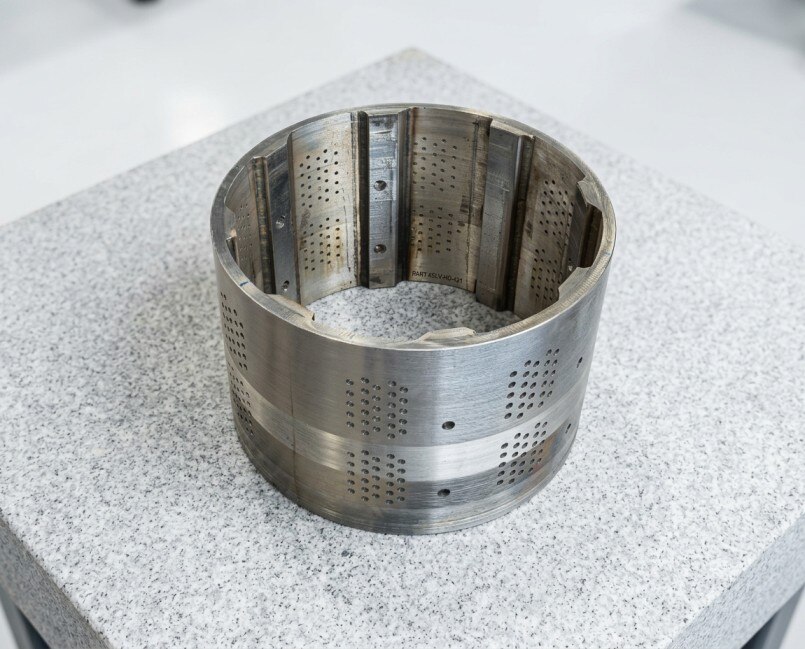 | Sleeve Sleeve Pranav Heavy Industries Private Limited manufactures high-precision Sleeves engineered for demanding industrial applications. |
How installation and maintenance preserve the sleeve’s reliability
A sleeve remains reliable only when the surrounding joint is prepared and the installation preserves its intended fit. Clean the housing, inspect it for cracks and distortion, deburr the lead-ins, confirm removal holes and lubrication paths, and verify pin or shaft dimensions before fitting.
1. Support the sleeve on the correct press surface and control the press force. Never drive through the bore or strike the sleeve directly; either action can distort the bore or start a crack.
2. Align the pin or shaft with the housing, keep grit and chips away from mating surfaces, and confirm that grease reaches the working interface rather than collecting at the entrance.
3. Use a controlled heating, cooling or pressing method specified for the materials and interference. Uncontrolled temperature changes can crack the sleeve, while excessive force can loosen retention and cause migration, rotation or fretting.
Read the wear pattern as evidence: uneven polishing or one-sided scoring indicates misalignment; displaced grease indicates excess clearance or poor sealing; rapid clearance growth points to abrasive contamination or unsuitable material. Noise and heat indicate insufficient clearance or seizure, while recurring pin wear indicates a damaged counterface.
A sleeve alone will not correct a worn shaft, pin, housing or alignment condition. Measure and repair those parts first. Record installation clearance, pin and bore measurements, grease interval, operating hours, removed-sleeve condition, photographs and replacement date. Include drawing preparation, first-article approval and machine downtime in the purchase plan.
Frequently asked questions
What does an industrial sleeve do inside machinery?
It separates, supports or spaces components at an interface while providing a controlled bearing surface. In pivots, linkages and hydraulic-cylinder eyes, it limits bore enlargement, shaft wear, fretting, galling and excessive clearance.
How do you choose between steel, bronze, polymer and a bearing?
Compare load, speed, oscillating or continuous motion, lubrication, contamination, temperature and available space. Choose steel for strength, bronze for compatible sliding and embedability, polymer for low lubrication needs, or a bearing when rolling motion reduces friction and suits the application.
How should you measure a replacement sleeve?
Measure the original drawing or unworn mating surfaces where possible. Record outside diameter, inside diameter, length, shoulder dimensions, chamfers, grooves, concentricity and surface finish, rather than copying dimensions altered by wear.
What inspection evidence proves sleeve quality?
Request the material certificate, heat or batch number, dimensional inspection report, hardness results when specified, surface-finish readings and records for non-destructive testing when the design requires it.
How do installation and maintenance preserve sleeve reliability?
Clean and inspect the housing and shaft, confirm alignment and clearance, use the specified installation force or method, lubricate the correct surfaces, and monitor looseness, temperature, noise and visible scoring during service.
Keywords