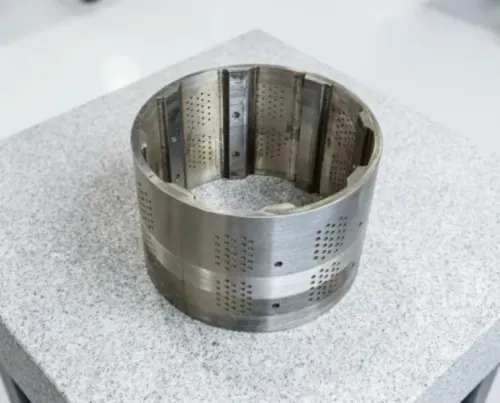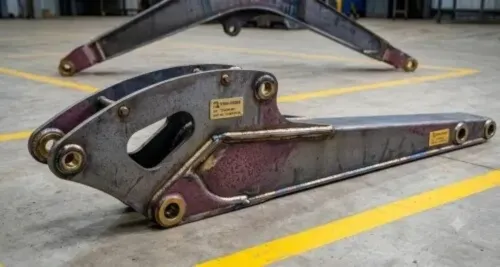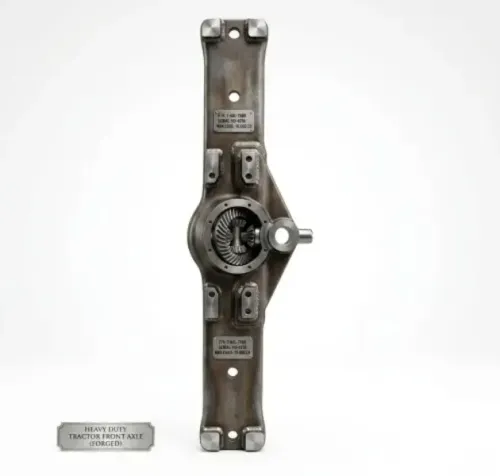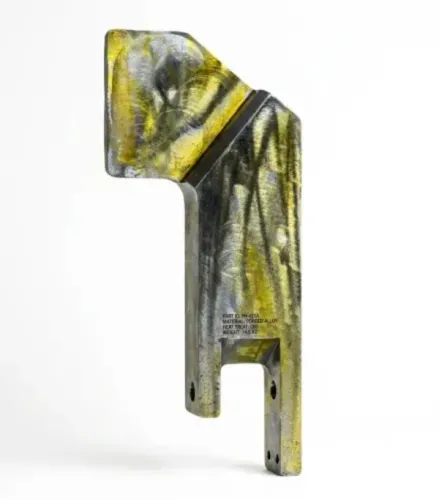
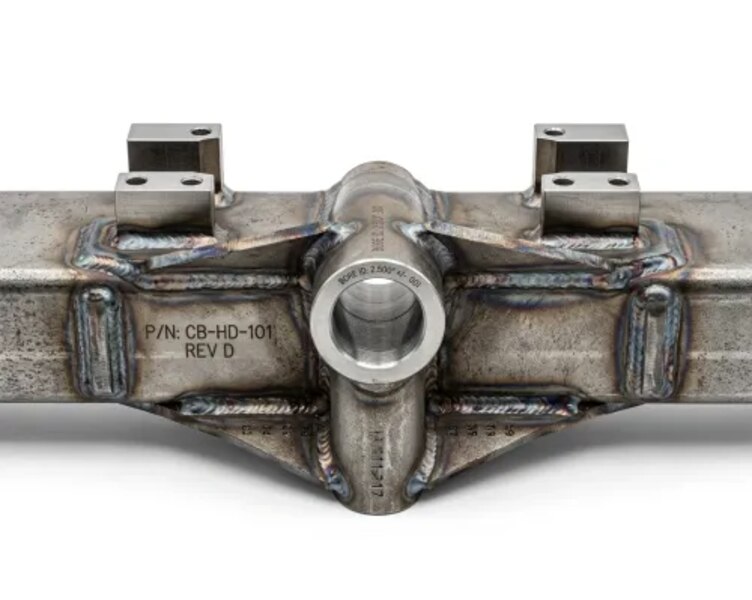
A center box cannot be quoted reliably from overall length, width, and weight alone. You need to define its machine function, mating interfaces, load cases, material condition, manufacturing route, and inspection method so that a supplier can build and verify an interchangeable part.
Key takeaways
- Define the machine function, duty cycle, and load case before requesting quotations.
- Control interfaces need named datums, fits, hole patterns, and geometric tolerances.
- Specify alloy, heat treatment, and manufacturing form as separate requirements.
- Request inspection records, sealing details, and cleanliness limits in the RFQ.
Start with the Machine Function and Load Case
Before requesting a quotation, define the component’s machine function and duty cycle—not merely its envelope. Identify whether it is a transmission housing, axle pivot housing, implement-frame cross-member, fabricated central chassis assembly, or another interface, and name the platform: tractor, harvester, tiller, seeder, sprayer, loader, or another machine.
Give the supplier numeric design inputs:
- Static load and impact load
- Bending moment and torsional load
- Fatigue cycle count and duty-cycle spectrum
- Operating temperature, lubricant, and design safety factor
Then provide overall length, width, height, wall thickness, estimated mass, mounting-face dimensions, and allowable dimensional tolerances. These dimensions alone do not establish interchangeability. List every mating part—shafts, bearings, seals, axle brackets, frame rails, covers, and hydraulic or oil passages—and state each interface’s location, clearance, alignment, and sealing requirement.
| Functional identity | What the supplier must understand | Likely manufacturing question |
|---|---|---|
| Transmission housing | Supports gears, shafts, bearings, lubricant, and seals | Can a casting or billet-machined form control bore alignment? |
| Axle pivot housing | Carries pivot reactions and articulating loads | Will a forging or casting resist impact and fatigue? |
| Implement-frame cross-member | Transfers frame and attachment loads | Can a weldment meet distortion and stiffness limits? |
| Fabricated central chassis assembly | Joins frame rails, brackets, and passages | Where are weld access, stress relief, and post-weld machining required? |
This definition distinguishes an agricultural machinery center box from a generic fabricated housing and gives the supplier a basis for selecting a forging, casting, weldment, or billet-machined form.
Control Interfaces with Datums, Fits, and Geometrical Tolerances
A drawing must establish a functional datum reference frame before assigning tolerances. Use the primary mounting face to control shaft-center height, then use a bearing-bore axis to locate a second bore; measuring everything from unrelated outside edges can conceal assembly error and create uneven bearing loading.
Show these interfaces explicitly:
- Hole pattern, bolt-circle diameter, mounting orientation, and shaft-center dimensions
- Bearing-bore diameters, seal lands, keyways, oil passages, and access features
- Thread size, pitch, class, depth, and whether each hole is through or blind
- Machined datums separately from as-cast, as-welded, drilled, and non-functional surfaces
| Feature | Specify | Failure if omitted |
|---|---|---|
| Bearing bores | ISO 1101 position, cylindricity, coaxiality, and run-out | Shaft misalignment or overloaded bearings |
| Mounting faces | Flatness, parallelism, and contact area | Incorrect shaft height or rocking joints |
| Seal lands | Roughness, waviness, lead, edge condition, and run-out | Leakage despite a correct diameter |
| Bolt pattern | True position to the functional datums | Forced assembly or stressed fasteners |
Use ISO 1101 for position, flatness, cylindricity, parallelism, and run-out instead of one general dimensional tolerance. Select bearing and shaft fits through ISO 286. H7 is a starting point for a hole-basis feature, not an automatic answer; ring loading, temperature, material, load, and assembly method determine the final fit.
Assign roughness, waviness, flatness, and contact-area limits by function. Bearing seats and dynamic seal lands need tighter control than outer faces. This relationship-based definition is the core of center box specifications in Chakan and a precision machined center box in Chakan.
Specify Alloy, Heat Treatment, and Manufacturing Form Separately
Write four separate callouts for an alloy steel center box: grade, supply condition, heat treatment, and production form. “Alloy steel” alone cannot control performance, machining, or acceptance.
1. Name the grade, such as 42CrMo4 to EN 10083-3 or AISI 4140, and state the supply condition: annealed, normalized, quenched and tempered, or case-treated. Record the required hardness range, test location, and traceability to heat or cast number.
For quenched-and-tempered material, specify whether hardness is measured on the finished bulk section, away from welds and thin walls. State whether you require a mill certificate, tensile test, impact test, or all three. Each condition changes strength, machinability, distortion, and weldability.
2. Record the manufacturing form separately: forging, casting, fabricated weldment, or billet-machined block. Give the reason, such as directional fatigue strength, complex internal passages, low-volume flexibility, or removal of weld distortion risk. Do not let a supplier substitute a different form without written approval.
3. For a welded box, define weld sizes, joint details, weld-access limits, welding sequence, distortion allowance, stress-relief treatment, and post-weld machining. Specify critical-weld inspection and acceptance limits for cracks, porosity, undercut, and lack of fusion. ISO 5817 can set an imperfection quality level; it does not replace load calculations, fatigue assumptions, or joint sizing.
The purchase specification must therefore verify chemistry, condition, form, and test records.
Build Inspection, Sealing, and Cleanliness into the Specification
A box can pass dimensional inspection and still fail in field service through water ingress, blocked oil passages, burrs, or coating on a bearing seat. For center box specifications in Chakan, make acceptance a staged procedure:
1. Verify incoming material identification against the purchase order, record heat or cast number, and retain heat-treatment records, including hardness results and treatment condition.
2. Approve the first-off setup before batch machining. Measure the principal bearing bore during production with a calibrated bore gauge, then inspect critical bores, mounting-hole locations, and datums by CMM or approved gauges at final inspection.
3. For repeat production, require a capability study for the principal bearing bore and mounting-hole locations. A capability record shows process consistency; one conforming inspection report does not.
4. Define seal type, seal-land roughness and condition, lubricant, breather arrangement, drains, water-shedding features, and corrosion protection. Specify deburring, edge-break limits, passage cleaning, tapped-hole depth, and blocked-passage checks.
5. List coating masks for bearing seats, seal lands, threads, and electrical grounding points. State the packaging method that prevents impact, moisture, and contamination during transport.
6. For fabricated boxes, inspect distortion after stress relief and again after final machining; released residual stress can move a finished bore. Link every critical feature to its measurement method, instrument, sampling frequency, and acceptance value.
Use a Chakan Supplier RFQ That Allows Technical Comparison
Compare suppliers against the same controlled technical baseline, not against the lowest quotation. Chakan is a sourcing location, not a specification class: it sets no accuracy, material, or load-capacity value.
Issue the RFQ with:
- The OEM-controlled drawing revision and the authoritative 3D model
- The named material standard, heat-treatment condition, and datum scheme
- The inspection plan, engineering change-control rules, and packaging requirements
- The required preservation method for machined, coated, and exposed surfaces
Ask every center box manufacturer in Chakan to state the proposed manufacturing form, machining datum strategy, stress-relief route, critical-feature inspection method, lead-time assumptions, and exclusions.
| Supplier response | Evidence to compare | Warning sign |
|---|---|---|
| Manufacturing form | Forging, casting, weldment, or billet route with its design rationale | Form selected without addressing load or distortion |
| Machining route | Feature-by-feature review showing how bore and mounting tolerances will be achieved | “CNC machining” stated without datums or sequence |
| Quality control | Material and heat-treatment records, first-off approval, in-process bore checks, and final CMM or gauge results | One final report with no process control |
| Repeatability | Capability study for the critical bore and mounting-hole locations | No data beyond a single conforming part |
When evaluating Pranav Heavy Industries Private Limited alongside other suppliers, request this same evidence and a control plan covering final inspection and preservation. A precision machined center box in Chakan is a sound choice only when the supplier demonstrates repeatable control of the approved revision and assembly interfaces.
Related product
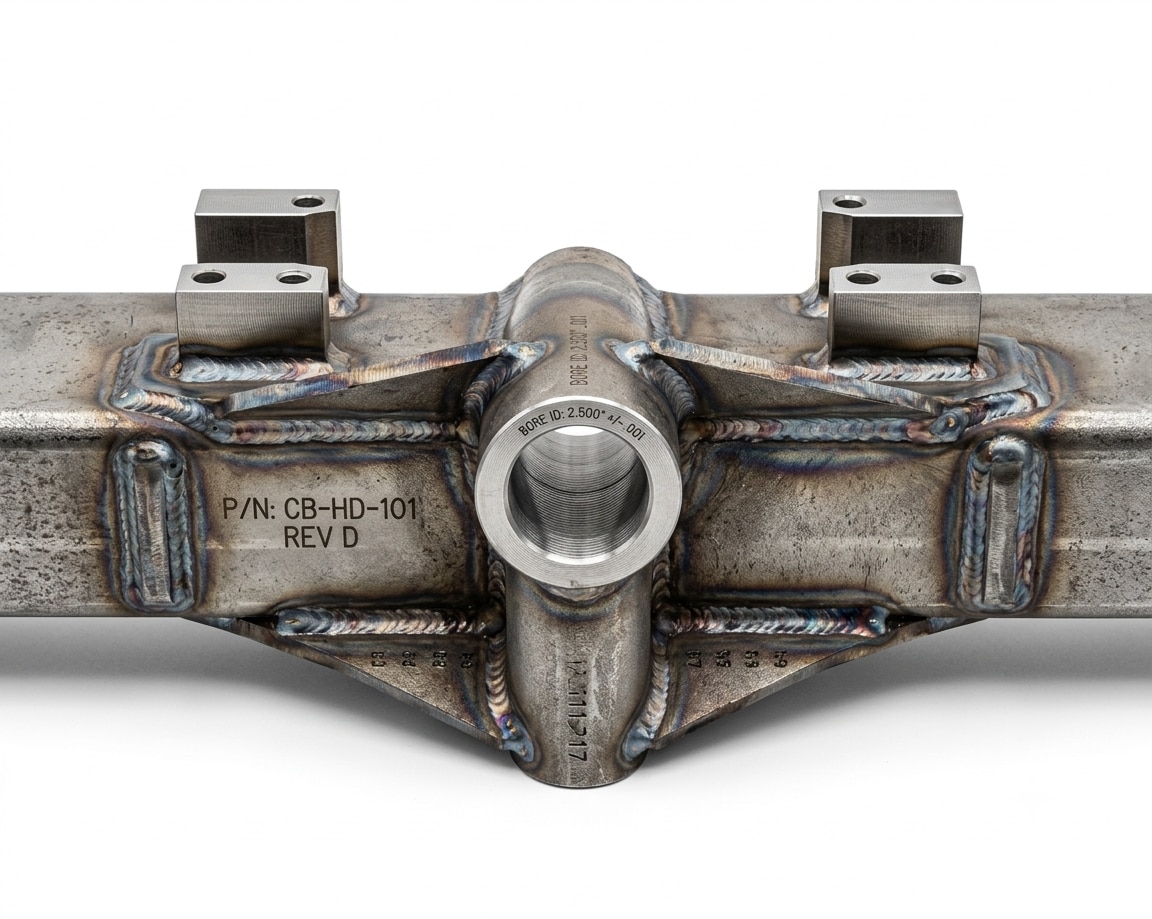 | Center Box Pranav Heavy Industries Private Limited manufactures precision-engineered Center Boxes designed for heavy-duty industrial and engineering... View product → |
Frequently asked questions
What should you define before sourcing an agricultural machinery center box?
State whether it is a transmission housing, axle pivot housing, cross-member, or chassis assembly, then identify the machine platform, duty cycle, loads, and interfaces.
Which dimensional controls belong in a center box specification?
Identify primary, secondary, and tertiary datums, then specify fits, hole locations, flatness, perpendicularity, concentricity, and other controls needed at each interface.
How should you specify an alloy steel center box?
List the material grade, required mechanical properties, heat-treatment condition, hardness range, and whether the part is cast, forged, welded, or machined from billet.
What inspection and cleanliness requirements should a center box RFQ include?
Request dimensional inspection reports, material certificates, weld records where applicable, leak-test results, sealing details, burr limits, chip removal, and the required cleanliness standard.
Keywords